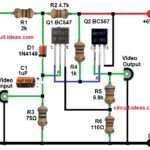
“Boost weak video signals easily with simple and low-cost DIY video amplifier circuit” In this article, a Transistor Based Video Amplifier Circuits increases weak video signals and improves signal strength. Also many DIY users use this circuit in CCTV systems, AV projects, old television repair work and video transmission systems. Furthermore, these circuits help reduce […]
Transistor Circuits
Low Noise Transistor Preamplifier Circuit
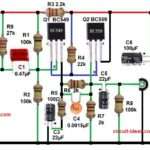
This simple Low Noise Transistor Preamplifier Circuit increases very small audio signals like microphone or weak music signals. Here, the circuit uses two transistors: Also, after the preamplifier, the signal becomes strong and we can send it to a power amplifier, as this circuit costs low, is easy to make and suits beginners. Circuit Working: […]
Transistor Based Medium Impedance Preamplifier Circuit
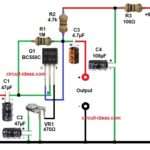
Like our previous post on the Low Impedance Input Transistor Preamplifier Circuit, we modify the same circuit to create a medium impedance preamplifier using a BC550C transistor. Moreover, this circuit increases weak audio signal and we can use it before power amplifier, also it works good for microphone, guitar, or small audio signals. Furthermore, it […]
Low Cost DIY Microphone Circuit using Normal Speaker
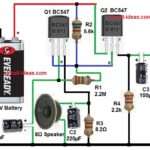
This project shows how we can use a normal speaker as a microphone and usually, a microphone converts sound into electrical signals. However, a speaker can also do the same work in reverse, therefore, this circuit becomes a simple and low-cost solution when we do not have a microphone. Moreover, it works well for basic […]
Low Impedance Input Transistor Preamplifier Circuit
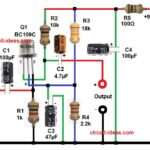
This post explains about a Low Impedance Input Transistor Preamplifier Circuit which is designed especially for small audio signals like microphone, guitar pickup and other low level sources. Also, the circuit uses one NPN transistor BC109C and few resistors and capacitors as it increases the weak signal voltage so next stage amplifier can use it […]
UJT Based High Voltage Mini Audio Amplifier Circuit
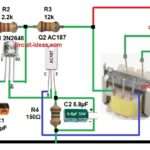
To begin with, the circuit in this article shows a simple high voltage mini audio amplifier which uses one UJT transistor Q1 2N2646 and one power transistor Q2 AC187. This UJT Based High Voltage Mini Audio Amplifier Circuit works with a high supply of around +125V and it can drive a small 4 ohm speaker […]